




You've mentioned that COVID was a moment where licensing and partnerships accelerated rapidly for Dr. Squatch. What do you feel was a significant shift that you and the team identified or capitalized on, that other brands may have missed at the time?
In 2020 when Covid hit we were able to still produce our soaps and that's when we really saw the business spike. Paid media acquisition was really cheap, and we were starting to see the success with the limited-edition launches.
Area 51 was the first limited edition soap and we were starting to see the success from it. My idea to follow upon that was to do a Mars bar. I worked in aerospace marketing, and I knew the Mars Rover launch was coming up. It was going to be a big deal on the news. So I was like, let's do this space, terrestrial follow-up. That was the first time we saw any real pop and buzz outside of the core SKUs. When we saw the response, everything really clicked for me on the limited side. I think there's something really strong here. We have our core soaps that are really, really great, but that was where I saw the first indicators of stickiness on social to really blow it out.
After the success of the Mars bar, my mind was fixated on this limited-supply model. I'm into fashion, and at this time Supreme was at a cultural peak. I thought if we could channel that limited-drop hype to soap, we could create a really unique collectibility in a category that's never had it before.
I thought the best place to start was these really nerdy fandoms. I myself am deep in the nerdy niches. I've seen how crazy collectibility is in this space, old boxes and old store signage going for crazy amounts on eBay, being posted on Reddit. I thought there was a way to transport this fandom to soap and provide not only the collectibility aspect with our packaging and artwork, but a functional sensory experience, soap being a legitimate utilitarian product that is not just another throwaway item.
That was the unlock I pushed the team to pursue. That was the big unlock during COVID that propelled me to hit hard on the limited partnership model.
The Supreme Model
You've likened growing the partnership and licensing business to nine figures at Dr. Squatch to the Supreme streetwear model. What do you feel the similarities are, and where did you take inspiration from?
There was certainly some product of being in LA and seeing the lines around the block for the Supreme store, seeing how they continued to get so many people hyped for these launches.
The overlap is the scarcity to drive collectibility and hype. You're training your audience to move on limited drops and recognize they'll miss out if they don't act quickly. Along with that, we had the true artistry, from the packaging to the scent and the soap, all being presented, which adds this element of craftsmanship.
With Supreme, they always had the crazy resale value on the aftermarkets. I thought if we could translate that hype to a digital experience, we could create the same relationship with our fan base. And that's what did happen. If you ever go on the Dr. Squatch Reddit, people are posting all the time, asking if people want to trade. People are literally taking in-store displays and signage to keep and collect at their house.
Sydney Sweeney's bathwater
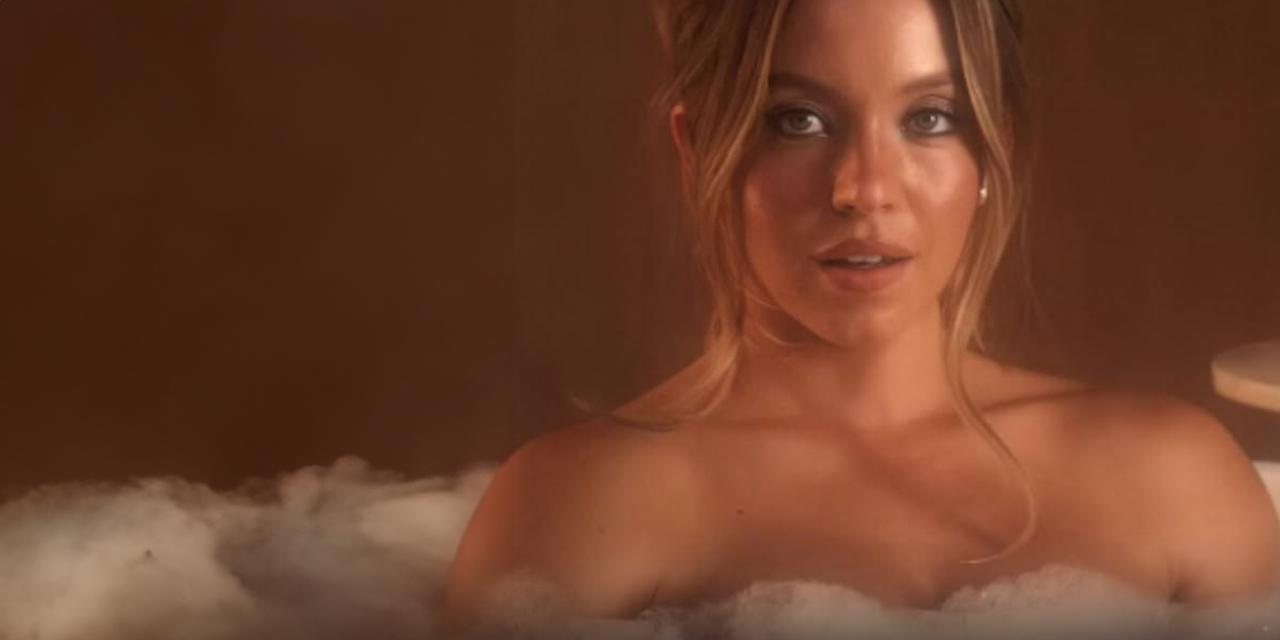
The Sydney Sweeney partnership was a huge success. How did the partnership come about, and why artificially limit the product to 5,000 units, making that aforementioned resale such a strong component?
Resale was always top of mind. My joking gold standard was: any launch we do, it goes for double on the aftermarkets. Same as what you saw with Supreme, the Nike shoe drops, all of that.
Huge credit to John Ludeke, he's still leading marketing at Squatch. He was really bullish on getting Sydney in the door and going back to a more masculine-targeted, "hot girl" angle. He came up with a body wash genie concept, but the bathwater soap idea stemmed earlier.
Me and my former coworker Dejan Rankovic, we always had this idea to can celebrity bath water and sell it. We wanted to play into this weird subculture of people buying "hot girl" used items. We could can the used bath water, shoot a spot, auction it off, and see how that reacted on the internet. We originally wanted to leverage our Liquid Death partnership for that angle, trying to get them to can the bath water, but we never felt like we could present it in the right way.
How that translated from the original canned-water idea was through an early partnership I did with Stone Brewing. Through our scientists, we found out that we could take Stone IPA and it would actually survive the soap-making process. That was our proof of concept. Fast-forward to this moment, and we're like, oh, we can actually take her bath water and physically put it in as part of the soap ingredients, because you can take liquids and safely incorporate them into the batch.
That was how the idea came to life. It went from us wanting to can it and playing into that weird subculture, to us fully being like, let's put it in the soap and lean into that angle.
To your point about the hype; we knew what we were doing. On the low end, units for a launch were 30,000 to 50,000, and that was the very low end for one SKU. 5,000 is much further below that. It was certainly intentional to drive hype and scarcity and get people crazed about this bath water soap.
The Sydney Sweeney campaign was fantastic, but the campaign is certainly high risk. With Sydney calling the audience "dirty little boys" and selling her actual bathwater as part of the soap, how do you mitigate and trust yourself in an "on the line" partnership like this, knowing there will be backlash?
When you're making a marketing bet like this, it's going to be polarizing. We knew there was probably going to be backlash. But we knew it was so well positioned with our core audience and that men were craving advertising speaking directly to them, yearning for these more traditional masculine advertisement approaches.
We took a bet that while the general population would likely not be okay with this, the males in our target demographic and age range would love it. We were always trying to be brand-safe. We never touched anything political. We had our guardrails, but we still wanted to play within this controversial world.
Liquid Death is the golden-child case study of pushing the limits and having it work well. At that point we were always pushing the boundaries with our advertising, our campaigns, and our messaging, so this felt like a step further.
If you know your core target audience and you are doing something that nails what they want on the head, everything else is noise. As long as it's for them, there's an added benefit to taking a risky play like this.
I think you've answered that in a very macro way, which is great. But I'm also interested in the micro side. Did you have to have stakeholder sign-off? Did the board have to get involved?
There was definitely major stakeholder approval. She was a major investment and it was a big bet all around, not only from a cost perspective but from a visibility perspective.
It wasn't just, "We're going to push this and rip." There was a lot of storytelling internally: here's the concept, here's why we're strong on it. At that point we'd built enough goodwill to get less pushback on something more out there, and we could reasonably justify: we know this is going to provide a strong impact. We also had a key category launch—body wash—that we were positioning it around. All of those factors together, we were able to sell this internally and forego any criticism that would've blocked the deal from getting done.
So you're saying essentially you'd built up trust already, and the tip you'd give is: build up trust over a number of campaigns to get to the thing you want to do that's more risky?
Definitely. So many brands get it wrong. They drop crazy money on celebrities and risky plays off the bat and then end up on their ass with no return. That was four and a half years into my tenure. We had done the reps to make sure the business was in a really good state. We'd focused on direct response and bottom-line impact. Then we were getting to the point where we could start to do more top-of-funnel plays and invest in much bigger names. It wasn't an overnight thing. It was a strategic buildup into being able to feel comfortable making these big bets and riskier plays.
Companies can miss the mark from an acquisition perspective, but from a retention perspective, it tends to be a safer bet. When you're speaking to your core direct audience that you already know, it should be more on the money. Those are safer, less risky bets—even though the messaging is riskier.

There's a difference between borrowing attention and borrowing trust. How do you think about partnerships as a way to transfer trust into the brand? What would your advice be for a brand breaking into a new geographical market or category expansion?
If you're working with well-established, like-minded brands that have strong social currency, that's the best shot at transferring trust. These partnerships are truly a matrimony of your brand ethos — what you stand for and who you are. You should only be working with people and brands that you want to be associated with long-term. It's the same principle as choosing a life partner: who you work with directly reflects your values and what your brand stands for. If you're willing to be publicly associated with them, that trust is usually automatically created with the core fan base, which is a reflection of their own social currency.
If you're going to be geo-specific, this can be a great way to hyper-target regions—whether it's a well-known brand or talent from that area, you can use that as a lever to tap into a location or culture. We did that with retailers, Canadian talent, we worked with Australian talent when we were breaking into that market. If you want to get very geo-specific, people who are well-known within those locations are the most turnkey approach versus big national brands that don't have that dialed-in, geo-specific appeal.
With category expansions, think about who the marquee brands and people are in those spaces. Who is commanding attention and who has the product quality to be associated with? One of our expansions was into male sexual wellness, so we went with Trojan. We wanted to make a food-inspired soap, so we went with Flamin' Hot Cheetos. You work with a partner where they'll allow enough of your brand to shine through, and it feels like a true partnership so you can reap the benefits of going into a new category.
The same advice applies: if you want to make it authentic, have a real reason for existing and a "why" for being.
A big name doesn't mean the campaign will convert. What would you see as the underlying conditions that determine whether a partnership actually drives revenue? What do you actually look for?
There has to be true connective tissue—between audiences in particular—for these to resonate. Legitimate, authentic tie-ins for the brand and IP you're partnering with. Fans can tell when something is made by fans or someone connected to the space. You want to avoid logo-slapping. We would joke about it with Every Man Jack. They would just slap a superhero on their body wash bottle and keep it moving. You see that all the time in licensing.
Find creative ways your brand and IP have matrimony and lean into those. People consume so much content and see so much product. The average radar for bullshit has just gone up. The more you meet them where they're at, the more this can land well. Fans will pay money for something that strikes a chord with them in an authentic way.
That connective tissue, or some really unique angle for product, creates enough novelty to drive revenue power. But revenue impact depends on the distribution and visibility of the brand. A brand like Star Wars is a powerhouse with a huge fan base, you don't necessarily need a topical moment to latch onto. With smaller IP and brands, having a moment or a topical beat always helped our tailwinds to drive revenue and momentum. This is how you position these for the best success if the brand isn't a powerhouse. People want storytelling, not just another product thrown at them.
I always look at how engaged the fan base is. Are they active on Reddit? Active on socials? Showing up at fan events decked out in gear? Is there a subculture within the fandom that drives this affinity? All of these show promising opportunity and are real markers to gauge if it's worth pursuing.
Beyond that, you can go pretty data-driven. We would survey our audience to see what existing audiences our customers would resonate with. Some plays are better for retention, some are better acquisition drivers. That's the power of partnerships. You're leveraging these fandoms to bring eyeballs to your brand from people who've never known you existed.
Beyond surveys, we would look at Google Trends reports to see how much people are actively searching these brands or IP, to show legitimate engagement.
Switching to talent. Look at their social engagement to understand how their audience interacts with them. Google Trends analysis, surveys, if you want to gut-check the fit. Initial conversations with their team are a great barometer for how the working relationship is likely to go. You can usually tell pretty strong signs in those initial stages.
If you're going with celebrity talent, focus on current recognition, top of mind, and a really strong script, concept, or campaign fit. It's risky to bet big on celebs, and it's more of a top-of-funnel impact, you'll see that before you'll see bottom-of-funnel and true revenue as a one-to-one driver.
For on-camera talent and content-focused campaigns, I'd lean towards mid-to-large-size creators. Not celebrity, but they have the strong engagement and distribution to give your content the most legs.
Licensing: Disney, Star Wars and partnerships
You've worked on licensing at the level of Disney and Star Wars. For a DTC brand that has cultural relevance but not necessarily the scale, what actually makes that kind of partnership viable? What levers can it realistically pull to become an attractive partner to someone like Disney?
Those big behemoths are fully focused on scale. They have minimum guarantees that range in the six figures. If you can't hit them, they don't care—they will not give you the deal. Pretty cut and dry.
I would say start with smaller studios and build up your reputation and visibility. We got lucky, one of the companies in our VC portfolio was Ruggable, and they gave us the connection to pitch Disney as our first partner. Back then, Disney wasn't as strict with minimum guarantees in our category. We had a right-time, right-place phenomenon.
But if your brand doesn't have the cultural relevance, the product quality and the storytelling of how the IP comes to life through your launch can really sway licensors. They see so much product come across their desk that they can tell the passion and qualitative input you've put in, and you stand out from the throwaway products and brands.
Start smaller, work your way up. It goes a long way when you finally pitch Disney and Pokémon-type IP you can show: we have clear processes, timelines, product development, and they can trust you to uphold the billions of dollars they've spent on their own image and characters.
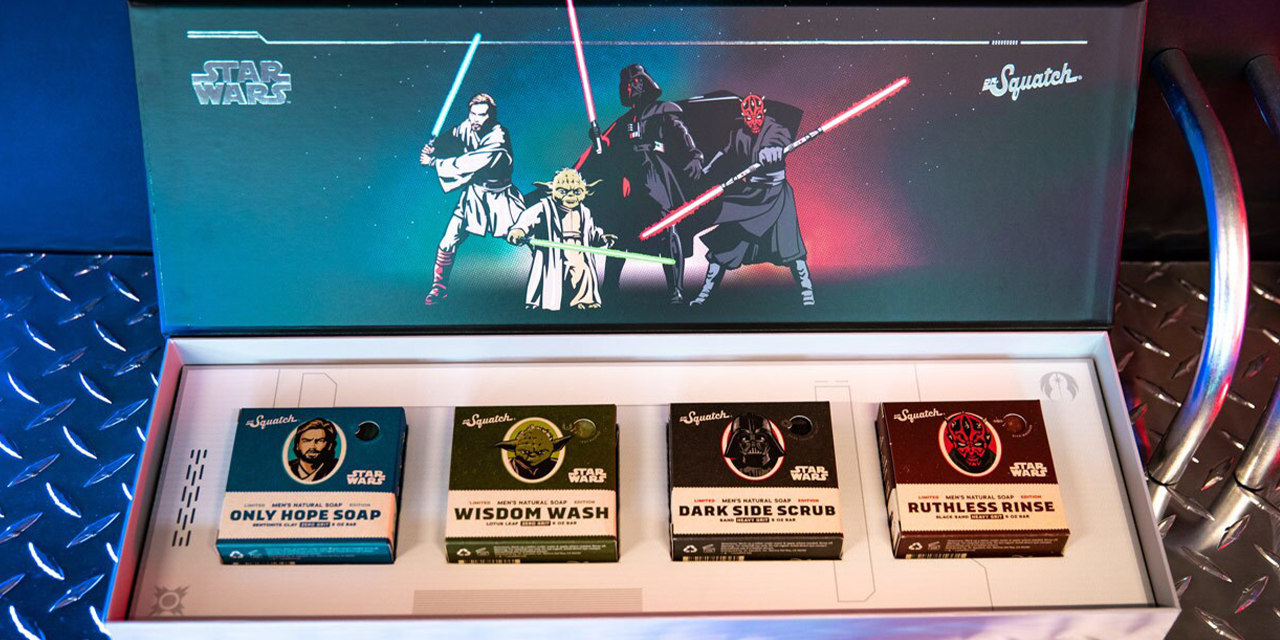
When I pitched Disney, the now-CEO, Josh, and I pitched together. He'd never seen Star Wars at the time. I was a huge Star Wars nerd, and I was like, we have to do Star Wars. I know for a fact there's a huge play.
I started doing some digging, and when I was at an antique mall in Ventura, I saw these old body wash bottles of Star Wars collectibles from the '90s. I took some pictures and was like, there's something really interesting here, they'd appreciate playing into this nostalgic feel but making it more modern for a masculine audience. Also framing this launch as a transportive way to choose your path aka “the light or dark side” through our products. Where the light side would be fresh and smooth, and the dark side would be musky and gritty. Giving them new real estate in men’s showers to experience that IP.
Me doing that legwork, explaining my fandom, my interactions, how I see these things at cons and antique malls, the real product storytelling for fans, they loved that. They were like, "This is incredible. You've clearly put in the work and thought about this in a really strong way. You're not just saying “Let's throw Grogu on a soap and keep it moving."
If you were to join one of these smaller-scale brands, say, a $5 to $10 million DTC brand today, what would your first partnerships move be if you had a 12 month runway?
I would start with a smaller studio. A Paramount or a Warner Brothers is a lot friendlier than a Disney and more open to doing these deals.
It depends on the internal strategy. I started this purely using connections, but there are licensing agents you can pay a fee to and make something very turnkey. We used a phenomenal licensing agent, Jason Kletzky at Collaborations Licensing, about three years in to knock on the door of Nike and Pokémon, the ones we could never get in the room with.
If a brand is looking to test the waters and doesn't want to build out a big in-house strategy, you can leverage an external agency. I've done that time and time again, even with influencer marketing. Test with an agency, it costs a little more to bring an agent in, but it costs way less than hiring a team to build all of that internally.
I'd recommend testing the waters that way, or start small with one of these smaller studios and lean into that as a proof of concept. See how you work together. How does the partnership feel? What does product collaboration look like for your brand? If you're starting from scratch, that's the safest way. With smaller studios, there's way less friction, way less approvals, and less product testing you have to go through.
Artificial Intelligence
How do you see AI impacting the future of partnerships, especially as brands gain the ability to replicate talent likeness and create scenarios that aren't physically possible? Where does that shift the value and the role of partnership talent?
We will see it applied to creative output. There's no way to physically create product with AI right now. You can use it for ideation, you can use it for content. There's still a safeguard for the current process—the relationship aspect and building products together.
On the content sidey mind goes to the Dunkin' Super Bowl spot, but more intentionally over the top and fantasy rooted, to show what you could never shoot with a reasonable budget. Having real talent and partnerships will only go up in value, given the amount of AI content that can flood the market.
If a creator or celebrity has a specific content theme that is consistently being put out, I could see brands making fun of that. The Rock is in Moana and he has the long hair, maybe a brand that works with him in the future plays into the meme-ability of people doing AI-generated long-hair Rock stuff. It'll feed into the creative content side.
But given the red tape and legality involved with getting these deals done, I don't see AI replacing that. I see it adding to the distribution.
Do you feel like there's a time where we have content deals or partnership deals with AI influencers and AI characters, or is that a long way off?
For Squatch, they could easily start having AI influencers that are mythical beasts promoting the product. Maybe there's a Yeti and a unicorn promoting the product. I think it'll land better when it's fantasy-driven versus reality. That's where I see the delineation going; people are going to be more sensitive to the false humanity of AI. But when there's clearly a fantasy element and a fun, character-driven storytelling approach, people might lower their guard and be more accepting of AI content creators.
What's a partnership mistake that you see brands making regularly, and that you feel is important to call out?
The force-fit: No through-line or connective tissue between the brands, done purely for clout and visibility. Without this connective tissue, you're just logo-slapping and doing both brands and audiences a disservice when it comes to real discovery rooted in shared interest.
That will impact long-term trust and LTV for anyone you're hitting with this campaign. If they perceive it as inauthentic, people think you did this purely for social clout and there's no real authentic connection or story to tell, we can tell you just did this because they had a million followers and it's a buzzy brand. Which usually leads to one off purchases driven by always fading hype and trends.
Maybe it's me being a marketer, maybe I'm harsher and notice the forced-fit more. But that is so obvious now, and I can see it in the comments: "They did this just because they're famous."
That is the ultimate thing you should avoid. It comes down to storytelling. Storytelling is rooted in so many things we do in marketing and business. If you're not leaning into what makes a good story—the reason for being and the "why"—if that's all just because they're famous or they have a lot of followers, you're missing the mark off the bat. That comes through in the creative. You can see in the concept that they just inserted Celebrity X, Y, Z into this thing, and that's that.